
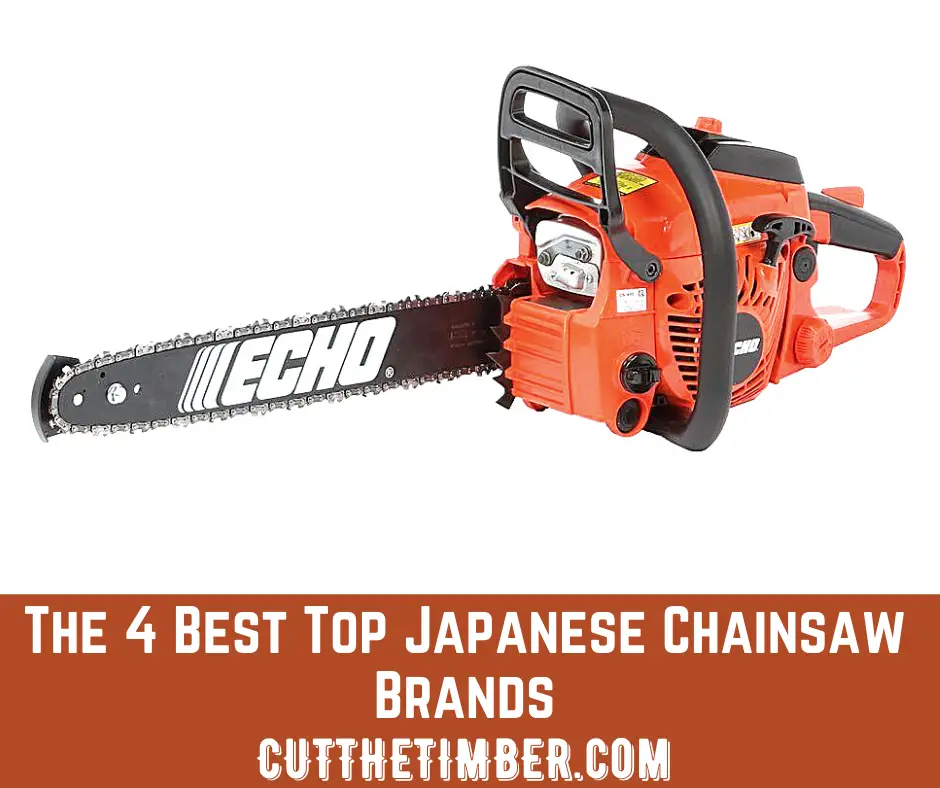
Top Japanese Chainsaw Brands – The 4 Best
Japanese chainsaw brands don’t get enough credit in the American market. Most people walk into a hardware store thinking they’ll grab a Husqvarna or a Stihl, and that’s it. But I’ve been running saws on my Montana ranch for years, and some of the most reliable cuts I’ve made came from Japanese-built machines. The engineering is tight, the price-to-performance ratio is hard to beat, and for a homeowner who doesn’t need a professional logging rig, these brands hit a sweet spot that Western manufacturers often miss.
This guide covers the four best Japanese chainsaw brands available to US buyers right now — Echo, Tanaka, Ryobi, and Makita. I’ll walk you through what makes each one worth considering, who each saw is built for, and where each brand falls short. If you’re still deciding whether a Japanese brand is right for you at all, I’d recommend checking out my broader guide to the best chainsaws for homeowners — that covers the full field, not just Japanese models.
Quick-Picks Comparison Table
| Brand & Model | Bar Length | Engine / Power | Best For | Price |
|---|---|---|---|---|
| Echo CS-400 18″ | 18 in | 40.2cc Gas | All-around homeowner use | No products found. |
| Tanaka 32.2cc 12″ | 12 in | 32.2cc Gas | Lightweight limbing & pruning | No products found. |
| Ryobi P546 10″ | 10 in | 18V Battery | Backyard homeowner, light cuts | No products found. |
| Makita XCU03PT1 14″ | 14 in | 18V X2 (36V) Battery | Premium cordless performance | No products found. |
What to Look For in a Japanese Chainsaw
Japanese chainsaws are built to a high manufacturing standard, but not every model is right for every job. Before you spend money on any of the four picks below, run through these criteria. Five minutes here saves a lot of frustration later.
Engine Size and Bar Length
Engine displacement — measured in cubic centimeters — tells you how much power the saw can deliver. For a homeowner doing occasional limbing, storm cleanup, or cutting firewood from smaller-diameter logs, a 30–40cc engine with a 12–18 inch bar covers most situations without being more saw than you need.
Match your bar length to the diameter of the wood you’re cutting. A 12-inch bar handles most pruning and limbing jobs cleanly. An 18-inch bar lets you drop small trees and split larger rounds. Going longer than 18 inches on a consumer-grade Japanese saw usually means you’re fighting the tool more than using it. For a deeper breakdown, my chainsaw bar length guide walks through the right sizing by job type.
Gas vs. Battery Power
Gas-powered saws give you unlimited runtime, more raw power, and the ability to work deep in the woods where there’s no outlet in sight. That’s why I still reach for a gas saw when I’m dropping timber on the back forty. But gas also means carburetor maintenance, fuel mixing, and a heavier saw.
Battery-powered saws have come a long way. If your cutting happens in the backyard — trimming branches, clearing brush, cutting down a small tree — a modern 18V or 36V battery saw is quiet, low-maintenance, and more than capable. Makita’s 18V X2 platform in particular pushes real power. I’ve written a full comparison if you want to dig into the gas vs. electric chainsaw decision before committing.
Parts and Service Availability
This matters more than most buyers realize, especially if you’re in a rural area. Echo wins this category outright — the brand has an established US dealer network, and parts are stocked at most outdoor power equipment shops. Makita is a close second, with widespread tool service through their US network.
Tanaka is now under the Yamabiko/Echo umbrella, so parts sourcing has improved, but you’ll still want to verify your local shop carries them before you buy. Ryobi’s service model leans on their warranty and the Home Depot relationship, which works fine for homeowners but isn’t the kind of setup a serious user wants to depend on.
The 4 Best Japanese Chainsaw Brands
These four picks represent the best available from Japanese manufacturers across gas and battery power, light and moderate-duty use, and budget to premium price points. Each one has real merit — the right pick depends on what you’re cutting and how often.
1. Echo CS-400 18″ — Best Overall Gas Chainsaw
No products found.
Echo is the name I recommend to almost every homeowner who asks me about a reliable gas chainsaw. The CS-400 is a 40.2cc, 18-inch bar saw that sits in a comfortable middle ground — enough power to drop small trees and cut firewood all afternoon, but not so much saw that a beginner feels like they’re wrestling with it.
What sets Echo apart from cheap import saws is the build quality. The CS-400 uses a professional-grade G-Force engine that runs cleaner and cooler than most consumer saws at this price. The air purge system removes air from the carburetor and fuel system before starting, which makes cold starts noticeably easier — a detail you appreciate on a 28-degree Montana morning.
The vibration-reduction system is legitimately good. After a long cutting session, your hands and forearms feel the difference. Echo also built an automatic chain oiler into this saw that keeps the bar lubricated without you thinking about it, which is exactly what a homeowner needs.
Echo backs the CS-400 with a 5-year consumer warranty — one of the longest in the segment. Parts are widely available at independent dealers and online. If something goes wrong two years from now, you’re not stuck.
The only real knock against the CS-400 is weight. At around 10 pounds without fuel, it’s not a lightweight saw. For extended overhead work or prolonged limbing sessions, that starts to add up. But for the core tasks most homeowners face — felling small trees, bucking logs, cutting firewood — this is the saw I’d buy first.
Pros
- 40.2cc engine handles real work without straining
- Excellent vibration reduction for long sessions
- Easy cold starts with air purge system
- 5-year consumer warranty — best in class
- Strong US parts and dealer network
Cons
- Heavier than lighter-duty Japanese saws
- Overkill for pure pruning or light trimming work
2. Tanaka 32.2cc 12″ — Best Lightweight Gas Saw
No products found.
If the Echo CS-400 is more saw than you need, the Tanaka 32.2cc is worth a serious look. This is a 12-inch bar, 32.2cc saw that weighs significantly less than the Echo — and that weight difference matters when you’re up a ladder trimming branches or working through a long morning of limbing.
Tanaka has been building outdoor power equipment since the 1930s and is now part of the Yamabiko group, which also owns Echo. The manufacturing heritage shows. This is a well-assembled saw with tight tolerances and a smooth-running engine that starts reliably and holds tune.
The 12-inch bar keeps this saw in limbing, pruning, and light bucking territory. You’re not felling full-grown timber with a saw this size, and you shouldn’t try. But for clearing storm debris, trimming back overgrown trees, or cutting small-diameter firewood, it handles the job efficiently without the extra bulk of a larger saw.
One thing to verify before you buy: the Tanaka listing on Amazon has gone inactive before and come back. Confirm the ASIN is live and the listing is current before you add to cart. If Tanaka has moved to a newer model in the meantime, that’s worth checking at your local dealer as well.
Pros
- Lightweight and easy to maneuver
- 32.2cc engine is smooth and fuel-efficient
- Ideal for pruning, limbing, and light cleanup
- Strong Japanese manufacturing heritage
Cons
- 12-inch bar limits it to smaller-diameter wood
- Not the right tool for felling or heavy bucking
- Tanaka listings can be inconsistent on Amazon — verify before buying
3. Ryobi P546 10″ — Best Battery-Powered Option
No products found.
Ryobi is the entry point for homeowners who want a no-fuss, battery-powered chainsaw that integrates with tools they probably already own. The P546 runs on Ryobi’s 18V ONE+ battery platform — the same batteries that power their drills, circular saws, and leaf blowers. If you’re already in the ONE+ ecosystem, this saw costs almost nothing to add to your lineup.
The 10-inch bar keeps things simple. This is a backyard saw — trimming small branches, cleaning up after a storm, cutting down a young tree that grew where it shouldn’t have. It’s not built for serious firewood production or timber work. But for the homeowner who needs a saw a few times a year and doesn’t want to deal with fuel mixing or carburetor maintenance, the P546 is the right call.
The tool itself is light, quiet, and starts instantly. Those aren’t small advantages when you’re doing a quick 20-minute cleanup and don’t want to deal with a cold-start gas engine.
Ryobi is technically a Japanese brand — founded in Hiroshima in 1943 — but it’s worth knowing that Ryobi’s power tools are now manufactured and distributed through Techtronic Industries (TTI) under license. The ownership structure is more complicated than a straight “Japanese brand” label, but the heritage is real and the tools deliver solid value at the price.
Pros
- Works with existing Ryobi 18V ONE+ batteries
- Instant start, no fuel mixing required
- Lightweight and easy to handle
- Low maintenance — ideal for occasional use
Cons
- 10-inch bar limits cutting capacity
- 18V platform won’t keep up with moderate-to-heavy cutting loads
- Not a serious option for firewood or tree felling
4. Makita XCU03PT1 14″ — Best Premium Battery Saw
No products found.
If you want battery-powered performance that actually competes with a light gas saw, the Makita XCU03PT1 is the one to buy. This saw runs on Makita’s 18V X2 platform — two 18V batteries working in tandem to deliver 36V of effective power. The kit comes with four 5.0Ah batteries and a dual-port rapid charger, which means you’re not sitting around waiting for a single battery to top off.
The 14-inch bar gives you real cutting capability. I’ve used this saw on 10–12 inch diameter logs without it struggling, which is impressive for a battery-powered tool. The brushless motor is efficient and runs cool, which extends both battery life and the motor’s lifespan.
Makita has been building professional-grade tools in Japan since 1915. Their engineering standards are as good as anything in the outdoor power equipment market, and their US service network is strong. If you’re already invested in the Makita 18V LXT platform — and a lot of contractors and serious homeowners are — the XCU03PT1 plugs right in.
The price is the sticking point. This is a premium kit, and you pay for the batteries and charger included in the bundle. If you already own Makita 18V LXT batteries, you might look for the tool-only version to save money. But for a homeowner who wants a capable, low-maintenance battery saw and wants to buy it right once, the kit is the better value. Battery chainsaws are well represented in the Japanese brand space — see my roundup of the best battery-powered chainsaws if you want to compare Makita against the broader field.
Pros
- 18V X2 (36V effective) delivers real cutting power
- 14-inch bar handles moderate-diameter logs
- Brushless motor for efficiency and longevity
- Kit includes four batteries and rapid charger
- Strong Makita dealer and service network in the US
Cons
- Higher price point than other options on this list
- Heavier than single-battery cordless saws
- Still not a replacement for a gas saw on heavy felling jobs
Frequently Asked Questions
Are Japanese chainsaws better than American-made saws?
Not categorically better — but often better value at the consumer level. Japanese brands like Echo and Makita invest heavily in engineering precision and quality control. At the homeowner price range, you’ll typically get tighter tolerances and better vibration management from a Japanese brand than from a budget American-branded saw. At the professional logging tier, Western brands like Stihl and Husqvarna still lead. It depends on the job and budget.
Is Echo a Japanese chainsaw brand?
Yes. Echo was founded in Japan in 1947 under the name Kioritz Corporation. The brand rebranded to Echo in the 1970s as it expanded into the US market. Echo is now part of the Yamabiko Corporation, a Japanese conglomerate. Despite being widely sold through American dealers, Echo is a genuinely Japanese brand from the ground up.
Is Makita made in Japan?
Makita was founded in Nagoya, Japan in 1915 and is still headquartered there. Some Makita tools are manufactured in Japan, while others are built in their facilities in Brazil, China, the UK, and elsewhere depending on the product line. The engineering and quality standards originate in Japan, and the brand maintains a strong Japanese identity even as manufacturing has globalized.
What is the difference between a Japanese and Western chainsaw?
The most commonly cited difference involves cutting direction. Traditional Japanese hand saws cut on the pull stroke rather than the push stroke, which allows for a thinner kerf and more precise cuts. This principle influences some Japanese-designed cutting tools. In modern powered chainsaws, the distinction is less mechanical and more about brand philosophy — Japanese manufacturers tend to emphasize refined engineering, lower vibration, and efficiency, while some Western brands prioritize raw power output.
Are Tanaka chainsaws still made?
Yes, but the brand has changed hands. Tanaka is now owned by Yamabiko Corporation, the same parent company that owns Echo. Production continues, and parts availability has improved as a result of the Echo/Yamabiko relationship. Tanaka saws are less commonly stocked at US retailers than Echo, but they remain a legitimate option, particularly for lighter-duty applications.
What is the best Japanese chainsaw for a beginner homeowner?
The Echo CS-400 is my first recommendation for beginners. It’s powerful enough to handle real tasks — felling small trees, cutting firewood, clearing storm debris — without being intimidating to use. The vibration reduction system makes it easier on your hands, and the 5-year consumer warranty means you’re not on your own if something goes wrong. If you want battery-only, start with the Ryobi P546 for light work or step up to the Makita XCU03PT1 if you expect to cut anything with meaningful diameter.
Do Japanese chainsaw brands have good parts availability in the US?
Echo and Makita both have solid US dealer networks with accessible parts. Echo in particular is widely stocked at independent outdoor power equipment dealers across rural areas, which matters if you’re not near a major metro. Tanaka parts are available but require more legwork to source locally. Ryobi parts are handled primarily through the Home Depot/TTI warranty system, which is fine for a homeowner but limited compared to a full dealer network.
Is Ryobi a Japanese brand?
Ryobi was founded in Hiroshima, Japan in 1943, so yes — it’s Japanese in origin. However, Ryobi’s power tool division has been licensed to Techtronic Industries (TTI) since 2000, and the power tools sold under the Ryobi name in the US are designed and manufactured through TTI, not by Ryobi Ltd. directly. The brand heritage is Japanese, but the modern power tool business is a licensed operation. That doesn’t make the tools bad — Ryobi ONE+ is a genuinely good platform for homeowners — but it’s worth understanding what you’re actually buying.
Final Thoughts
Japanese chainsaw brands earn their reputation. Echo, Makita, Tanaka, and Ryobi each bring something different to the table — and all four are worth considering depending on what you’re cutting and how often you’re cutting it.
If I had to send every homeowner reading this to one saw, it’s the Echo CS-400. It’s reliable, powerful enough for real work, backed by a best-in-class warranty, and supported by a dealer network that makes it easy to keep running for years. That’s the combination that matters most when you’re maintaining a property and need a saw you can trust.
No products found.


